NURSING CARE RELATED TO THE SENSORY AND
NEUROLOGICAL SYSTEMS
1-5
1-5. HEARING
The human ear (figure 1-2) serves two major sensory functions--hearing and equilibrium.
a. Sound stimuli travel as airborne waves, which are collected by the external ear. The airborne waves pass through the external auditory meatus (ear canal) to the tympanic membrane, which separates the external and middle ear.
b. The physical vibration of the airborne waves is converted to mechanical vibration by the tympanic membrane and the ossicles. The ossicles (malleus, incus, and stapes) articulate with both the tympanic membrane and the oval window, which opens into the vestibule of the inner ear.
c. When the ossicles are set into mechanical vibration, the stapes acts as a plunger against the oval window, imparting pressure pulses to the fluid (perilymph) of the inner ear.
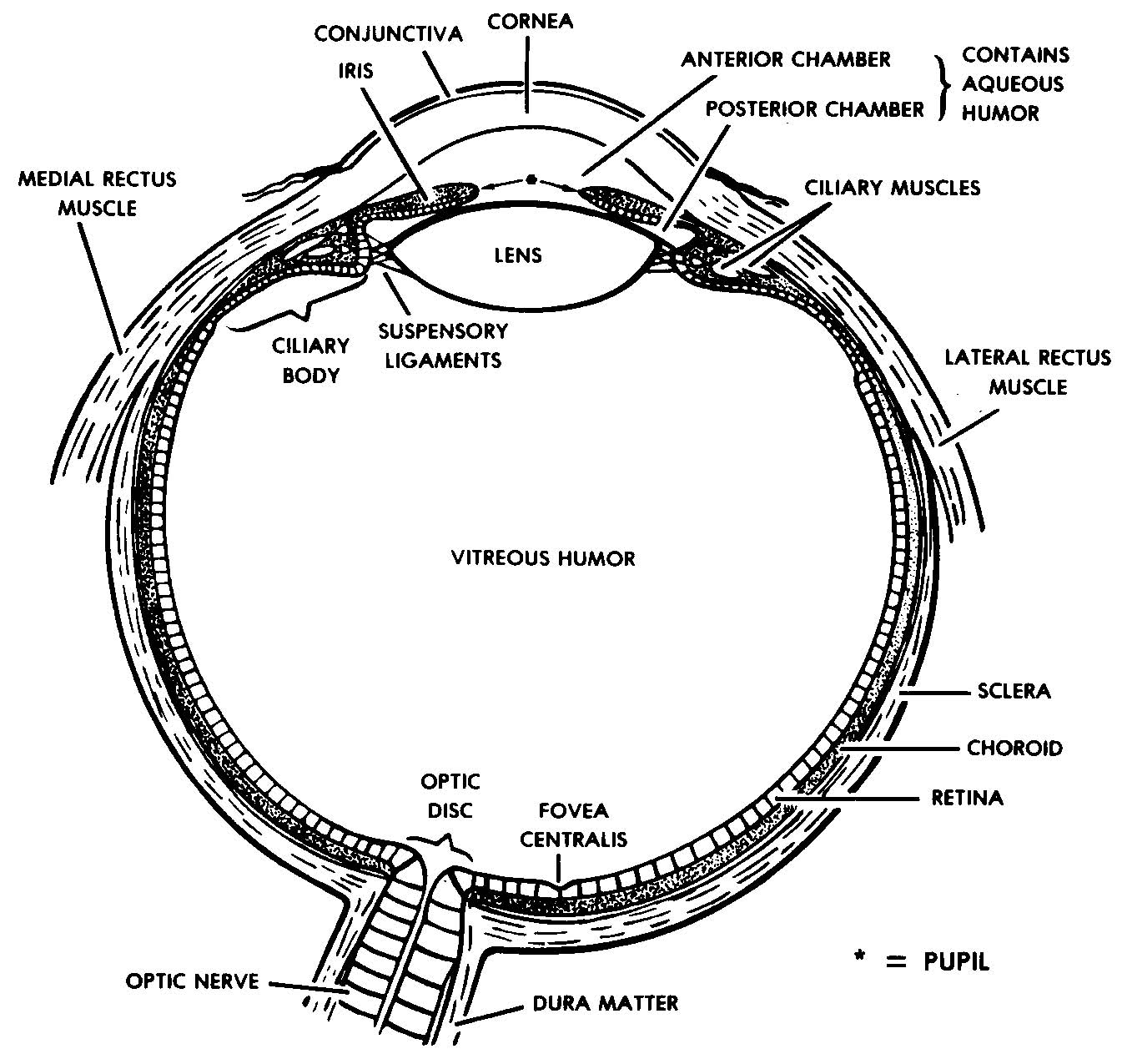
Figure 1-1. The eye.
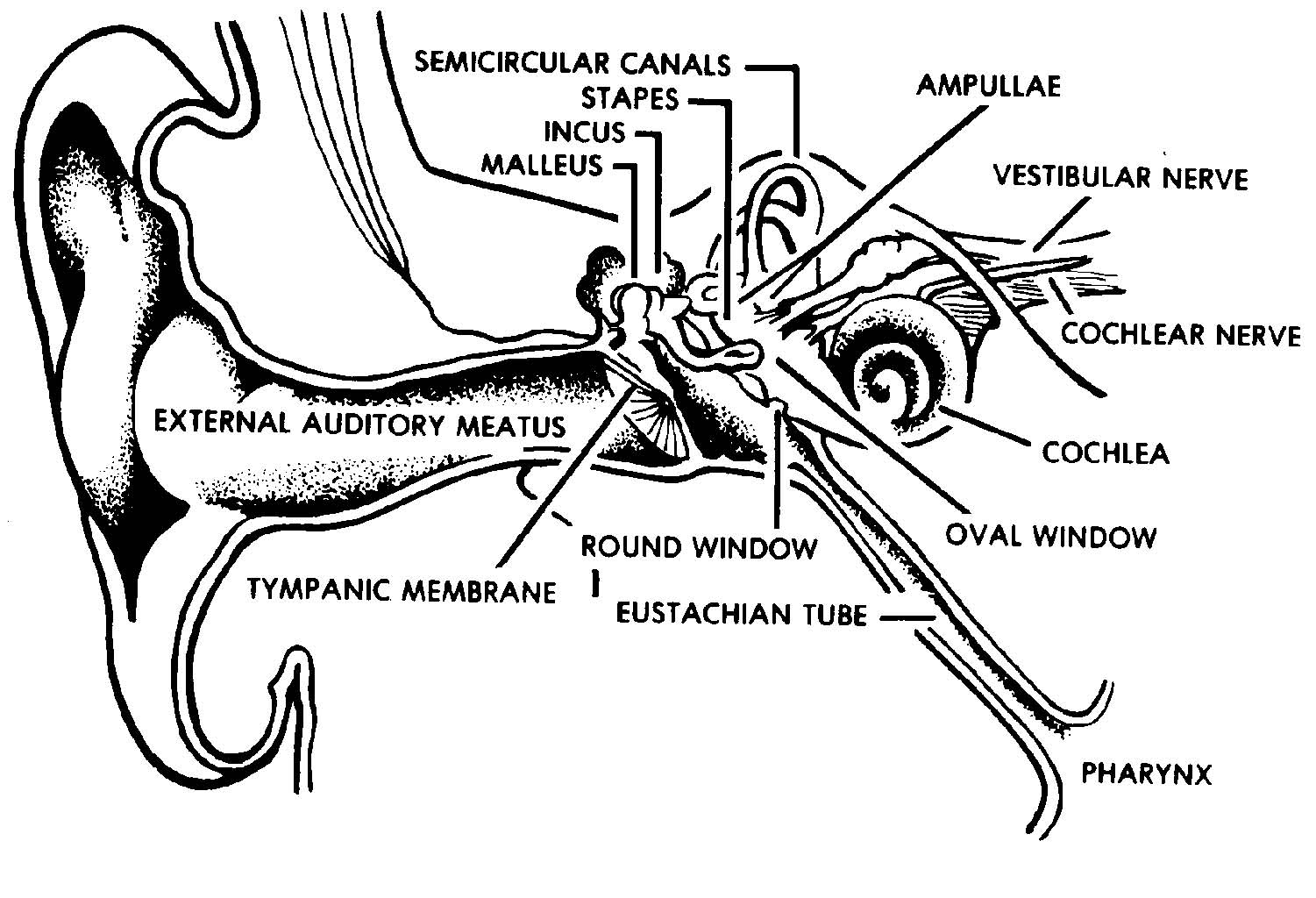
Figure 1-2. The ear.
d. Fluid vibrations of the perilymph are converted to nerve impulses when the hair cell receptors within the cochlea are stimulated by the fluid vibrations. The nerve impulses are carried to the brain where they are interpreted as sound.