1-12
1-12. CRUTCHES
a. Crutches are used to promote ambulation and independence in patients with affected lower extremities. The use of crutches is a complicated procedure that is routinely taught by the physical therapy department. There are occasions, however, when the nursing staff will have this responsibility. The physician will prescribe the use of crutches and the gait (crutch-walking method) to be used. The prescribed gait depends upon the amount of weight bearing permitted on the affected leg(s). The crutches must be "fitted" to the patient and instructions given for the prescribed crutch-walking method.
b. Standard axillary crutches need two adjustments--the length of the crutch and the position of the handgrip. Prior to adjusting, prepare the crutches with padding on the axillary bar and a rubber tip on the end of each crutch.
(1) Have the patient lie supine, arms at sides, wearing a shoe on the unaffected foot.
(2) Using a tape measure, measure from the axilla to the heel of the shoe and add two inches. Adjust the crutch shaft to this measurement. Or . . .
(3) Place the crutch along the patient's unaffected side with the axillary pad at the axilla and the crutch tip 6 to 8 inches to the side of the heel. Adjust the crutch to fit this length.
(4) Have the patient stand at the bedside with the crutches in place and grip the hand bars. You should be able to fit two fingers between the axilla and the axillary bar when the patient is standing in the tripod position (see figure 1-7).
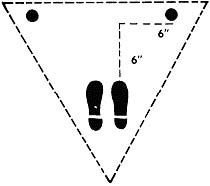
Figure 1-7. Tripod position.
(5) Adjust the hand bar so that the patient's elbow is flexed approximately 30° when the hand grips the hand bar.
(6) Check each crutch for proper fit and ask the patient if the crutch feels comfortable.
c. With properly fitted crutches, the patient is almost ready to learn ambulation with crutches. Prepare the patient for instruction by doing the following:
(1) Explain the procedure to the patient and determine if the patient has the upper body strength and ability to ambulate.
(2) Ensure that the patient is fully clothed and wearing non-skid slippers or shoes.
(3) Assist the patient to stand. Have the patient grasp both crutches in one hand at the handgrip, then push off from the bed with the free hand using the crutches for support.
(4) Instruct the patient to stand in correct body alignment with the tip of the crutches 6 inches in front and 6 inches to the side of the feet. (This is the tripod position.) The hands and arms, not the axillae, should bear the weight. The elbows should be flexed about 30°.
(5) Teach the prescribed gait.